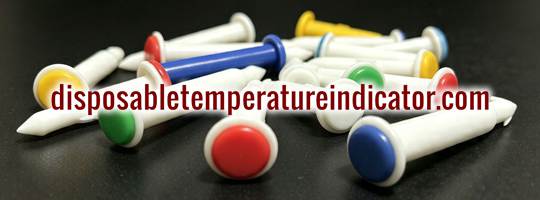
How Disposable Pop-Up Timers Are Manufactured for Food Industry Applications
How Disposable Pop-Up Timers Are Manufactured For Food Industry Applications
A disposable pop-up timer may look like a small and simple component, but producing a reliable temperature indicator for commercial food applications requires careful control of materials, temperature activation, assembly, and quality inspection.
For food manufacturers and procurement teams, understanding how these products are made can be useful when comparing suppliers. A factory that specializes in disposable temperature indicators should be able to explain not only the finished product, but also the manufacturing principles behind its performance.
This article provides a practical overview of the manufacturing process and the factors that matter when selecting a disposable temperature indicator manufacturer for long-term supply.
What Is A Disposable Pop-Up Timer?
A disposable pop-up timer is a single-use cooking temperature indicator designed to provide a visual indication when food reaches a predetermined activation temperature.
The same basic product may be described in different ways depending on the application or market, including disposable cooking thermometer, single use food temperature indicator, disposable meat thermometer, pop up timer thermometer, or food temperature indicator.
In commercial food production, the important consideration is not the name used to describe the product, but whether the indicator provides consistent temperature activation and can be integrated efficiently into the intended production process.
How A Disposable Temperature Indicator Works
The basic operating principle is relatively straightforward. A temperature-sensitive sensing material responds when the surrounding food reaches its designed activation point. The resulting movement releases or raises the indicator button, providing a visible signal.
This allows the product to function without batteries, electronic components, or an operator having to continuously monitor a separate thermometer.
The activation temperature can be selected according to the intended food application. Commercial products may be available at different temperature settings, allowing manufacturers to match the indicator to different poultry, meat, and prepared food products.
Key Components Used In Manufacturing
A disposable temperature indicator is made from several components that must work together consistently.
Food-Grade Polymer Components
The housing and internal structural components can be manufactured using food-grade PA66 Nylon. Material selection is important because the product is intended for use with food during cooking or processing.
Temperature-Sensitive Sensing Material
The sensing mechanism uses a food-derived temperature-sensitive wax system. Its purpose is to respond at the specified activation point and initiate the mechanical movement of the indicator.
Metal Spring
A precision metal spring provides the mechanical force required for the pop-up action. The spring, sensing material, and surrounding components must be properly matched so that the finished indicator operates consistently.
The Manufacturing Process
1. Material Preparation
Manufacturing begins with the preparation and inspection of the materials used for the product.
For a professional food temperature indicator manufacturer, material consistency is important because variations in components can affect the performance of the finished indicator.
2. Component Molding
Polymer components are produced through controlled molding processes. The dimensions of the housing, core, and other molded parts need to remain consistent because the mechanical operation of the finished product depends on accurate component relationships.
3. Sensing System Preparation
The temperature-sensitive sensing material is prepared according to the required activation specification.
Different products may require different activation temperatures, so production control at this stage is particularly important for OEM and custom orders.
4. Assembly
The molded components, sensing system, spring, and indicator button are assembled into the finished unit.
The assembly process must maintain the correct positioning of the internal components. Small dimensional variations can affect the activation and pop-up performance of the product.
5. Temperature Activation Testing
Finished products are inspected and tested to verify that the indicators activate within the specified temperature range.
For commercial applications, approximately ±2°F activation accuracy can be an important specification when selecting a supplier.
6. Final Inspection And Packaging
After production and testing, finished indicators are inspected before packaging.
Depending on the customer's requirements, products may be supplied in bulk packaging, OEM packaging, resealable bags, polybags, display boxes, or retail blister card packaging.
Why Manufacturing Specialization Matters
A disposable temperature indicator is a specialized product. Although the finished unit is small, its performance depends on the interaction of materials, temperature-sensitive components, mechanical parts, and assembly tolerances.
For this reason, buyers looking for a disposable temperature indicator manufacturer should consider whether the supplier has long-term experience with the product category rather than simply comparing quotations from general trading companies.
A specialized single use temperature indicator factory can develop deeper process knowledge and maintain more consistent production methods over time.
How Manufacturing Experience Benefits B2B Buyers
For an importer or food manufacturer, supplier experience has practical value.
- More consistent production processes
- Better understanding of activation temperature requirements
- More effective OEM communication
- Greater familiarity with food industry applications
- Better support for repeat and bulk orders
These factors become increasingly important when a company moves from sample evaluation to regular commercial purchasing.
OEM Manufacturing And Custom Temperature Indicators
Food companies do not always need a standard product. Different products, markets, and packaging programs may require different specifications.
A professional OEM disposable temperature indicator supplier may provide customization such as:
- Activation temperature
- Product color
- Logo injection molding
- Retail packaging
- Private label packaging
- Bulk packaging configurations
For international buyers, OEM capability can be particularly useful when the temperature indicator will be incorporated into a branded poultry, meat, or prepared food product.
Applications In Poultry And Meat Processing
Disposable pop-up timers and temperature indicators are used in a variety of food applications.
- Turkey processing
- Chicken processing
- Poultry roasting
- Meat processing
- Frozen poultry products
- Ready-to-cook food
- Commercial roasting applications
The appropriate activation temperature depends on the product and the manufacturer's application requirements. Buyers should therefore specify the intended food application when requesting samples or quotations.
What Should Buyers Ask A Manufacturer?
Before selecting a supplier, procurement teams should ask several practical questions.
- How long has the factory specialized in disposable temperature indicators?
- What materials are used?
- What activation temperatures are available?
- How is activation accuracy controlled?
- Can the product be customized?
- Can the factory support bulk and repeat orders?
- What packaging options are available?
- Does the supplier have international export experience?
These questions provide a better basis for supplier evaluation than unit price alone.
Why Factory-Direct Supply Can Be Important
For B2B buyers, direct communication with the manufacturing source can simplify the sourcing process.
Instead of passing technical specifications through several intermediaries, buyers can communicate requirements directly with the factory responsible for production.
This can be particularly valuable for custom temperature indicators, private label programs, and large recurring orders where product consistency is important.
From Product Component To Long-Term Supply
The real value of a professional disposable temperature indicator manufacturer is not simply the ability to produce an individual unit. It is the ability to reproduce the same specification consistently across large quantities and repeated production cycles.
For food manufacturers, distributors, and importers, this distinction matters. A reliable temperature indicator becomes part of the broader supply chain, and supplier consistency can be just as important as the initial product specification.
Frequently Asked Questions
How are disposable pop-up timers manufactured?
They are manufactured through a combination of molded polymer components, a temperature-sensitive sensing system, a precision metal spring, mechanical assembly, temperature activation testing, and final inspection.
What materials are commonly used in disposable temperature indicators?
Food-grade PA66 Nylon can be used for the housing and core, together with a food-derived sensing wax system and a precision metal spring.
How accurate is a disposable temperature indicator?
Commercial products can be designed for approximately ±2°F activation accuracy, depending on the specific product specification and manufacturing controls.
Can a disposable temperature indicator be customized?
Yes. OEM manufacturers can provide customized activation temperatures, colors, logos, and packaging for commercial applications.
Who purchases disposable temperature indicators in bulk?
Typical B2B buyers include poultry processors, meat manufacturers, food companies, distributors, supermarket suppliers, and private label brands.
Why should buyers work with a specialized manufacturer?
A specialized manufacturer has direct experience with the product's materials, sensing system, mechanical structure, production process, and temperature activation requirements, which can support more consistent long-term supply.
DISCLAIMER
"Pop-up timer" is a commonly used descriptive industry term for a type of disposable cooking temperature indicator. It may describe the functional design or operation of such products and is not intended to identify a particular manufacturer or brand.
PopNReady™ is an independent OEM brand of disposable cooking temperature indicators manufactured by LIOU Manufacturing . We are an independent factory-direct manufacturer and are not affiliated with any other brand or manufacturer unless expressly stated.