Disposable Temperature Indicators vs Digital Thermometers: Choosing The Right Solution For Food Processing
Disposable Temperature Indicators vs Digital Thermometers: Choosing The Right Solution For Food Processing
Temperature control is one of the most important factors in modern food production. From poultry processing to prepared meals and meat manufacturing, companies need reliable methods to confirm that products reach the required temperature during cooking and processing.
When selecting a temperature monitoring solution, food manufacturers often compare disposable temperature indicators with digital thermometers. Although both products serve different purposes, understanding their advantages helps companies choose the right solution for their production environment.
Different Approaches To Temperature Monitoring
Disposable temperature indicators and digital thermometers are designed for different applications.
Digital thermometers are generally used for:
- Manual temperature measurement
- Quality inspection
- Laboratory testing
- Process verification
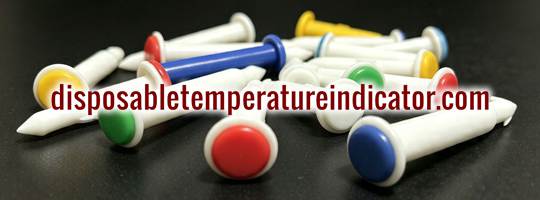
Disposable temperature indicators are commonly used for:
- Individual product temperature indication
- High-volume food production
- Retail-ready food products
- Commercial cooking applications
The right choice depends on production requirements, workflow, and the customer's application.
Advantages Of Disposable Temperature Indicators
For many food manufacturers, disposable temperature indicators provide a simple and efficient solution for large-volume production.
1. Simple Visual Confirmation
A disposable temperature indicator provides an immediate visual signal when the target temperature is reached.
Operators do not need additional equipment, batteries, or manual measurement steps.
2. Suitable For High-Volume Production
Large food processing facilities may handle thousands of products daily. Using individual disposable indicators allows temperature confirmation at the product level.
This approach can be useful for:
- Turkey production
- Chicken processing
- Meat products
- Ready-to-cook foods
- Frozen food applications
3. No Battery Or Electronic Components
Disposable temperature indicators operate through a mechanical temperature sensing system without batteries or electronic components.
This makes them simple, lightweight, and convenient for many commercial food applications.
Advantages Of Digital Thermometers
Digital thermometers also provide important benefits in professional food environments.
They are often selected for:
- Testing and inspection procedures
- Temperature verification
- Production quality checks
- Research and development applications
For some operations, digital measurement tools remain an essential part of quality control systems.
Why Many Food Manufacturers Use Both Solutions
Disposable temperature indicators and digital thermometers do not necessarily replace each other. Many professional food companies use both solutions for different purposes.
For example:
- Digital thermometers for process verification
- Disposable indicators for product-level temperature confirmation
Combining different temperature solutions can help manufacturers improve efficiency while maintaining quality control.
Key Factors When Selecting A Temperature Indicator Supplier
Regardless of the product type, supplier quality is critical for food manufacturers.
Important evaluation factors include:
- Temperature accuracy
- Material safety
- Production consistency
- Export experience
- Customization capability
For disposable temperature indicators, buyers should also consider whether the supplier can support long-term bulk production.
Technical Requirements For Professional Disposable Indicators
Industrial buyers usually review several technical specifications before selecting a disposable temperature indicator.
- Activation temperature range
- Activation accuracy
- Product dimensions
- Material composition
- Packaging options
Professional models are designed for consistent performance in commercial food applications.
Choosing The Right Solution For Your Application
There is no universal solution for every food manufacturer. The best choice depends on the production process.
Companies should consider:
- Production volume
- Required temperature confirmation method
- Product packaging requirements
- Quality control procedures
- Customer expectations
Understanding the application first helps companies select the most suitable temperature monitoring method.
Frequently Asked Questions
Are disposable temperature indicators the same as digital thermometers?
No. They are different temperature monitoring solutions designed for different applications.
Why do food companies use disposable temperature indicators?
They provide simple visual temperature indication and are suitable for high-volume food production.
Can disposable indicators replace digital thermometers?
They may replace some applications, but many companies use both solutions together.
Are disposable temperature indicators suitable for meat processing?
Yes. They are commonly used in poultry, meat, and prepared food applications.
What accuracy should buyers look for?
Professional food applications often require consistent activation accuracy, commonly around ±2°F.
Do disposable indicators require batteries?
No. They use a mechanical temperature sensing system.
Can manufacturers customize disposable temperature indicators?
Yes. OEM options may include activation temperature, colors, logos, and packaging.
Which solution is better for industrial food production?
The best solution depends on the company's production process, quality requirements, and application needs.
DISCLAIMER
"Pop-Up Timer", "Disposable Temperature Indicator", and related terminology are generic industry descriptions for single-use temperature indication products. We are an independent Chinese direct-source manufacturer specializing in disposable pop-up timers and temperature indicators since 2006. We are not connected with VOLK or any other brands. Any references are provided only for product identification, technical explanation, and professional B2B discussions.